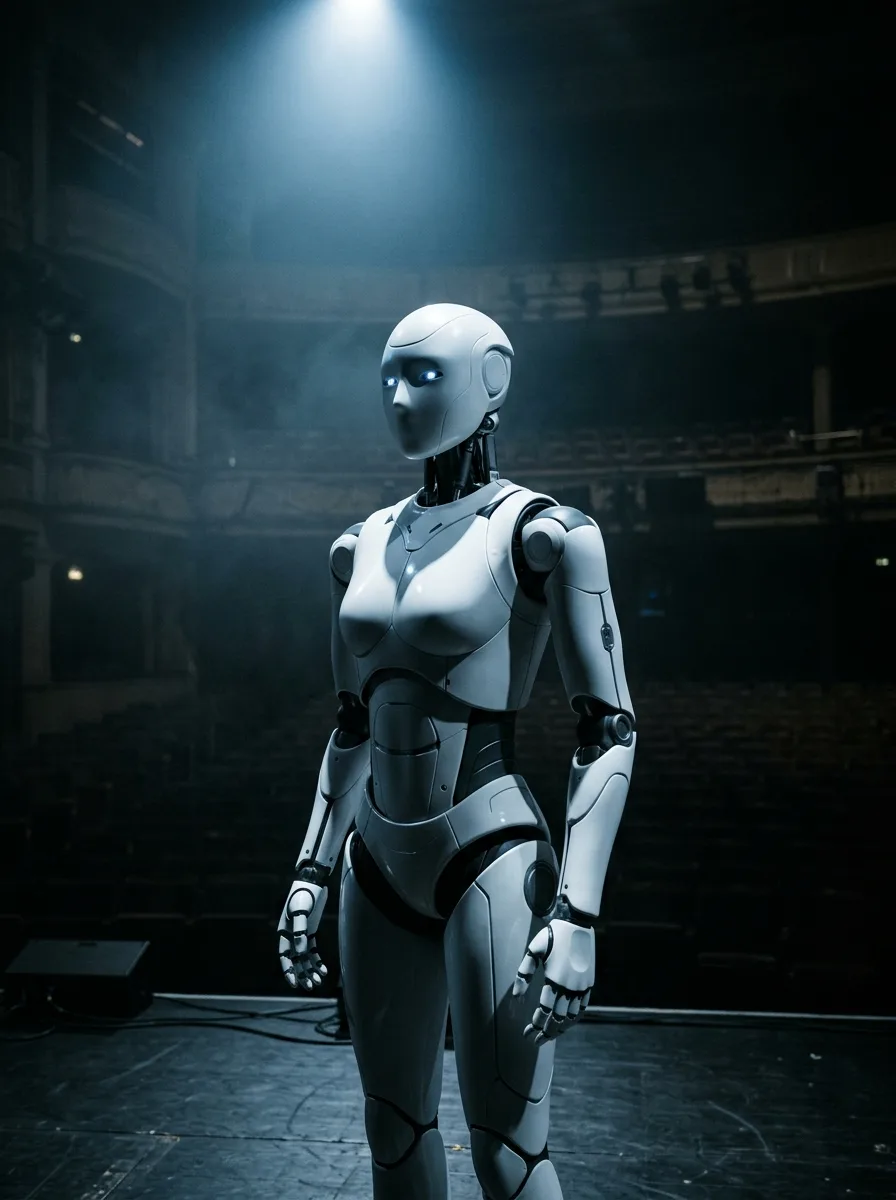

Sleek white humanoid robot on a dark auditorium stage
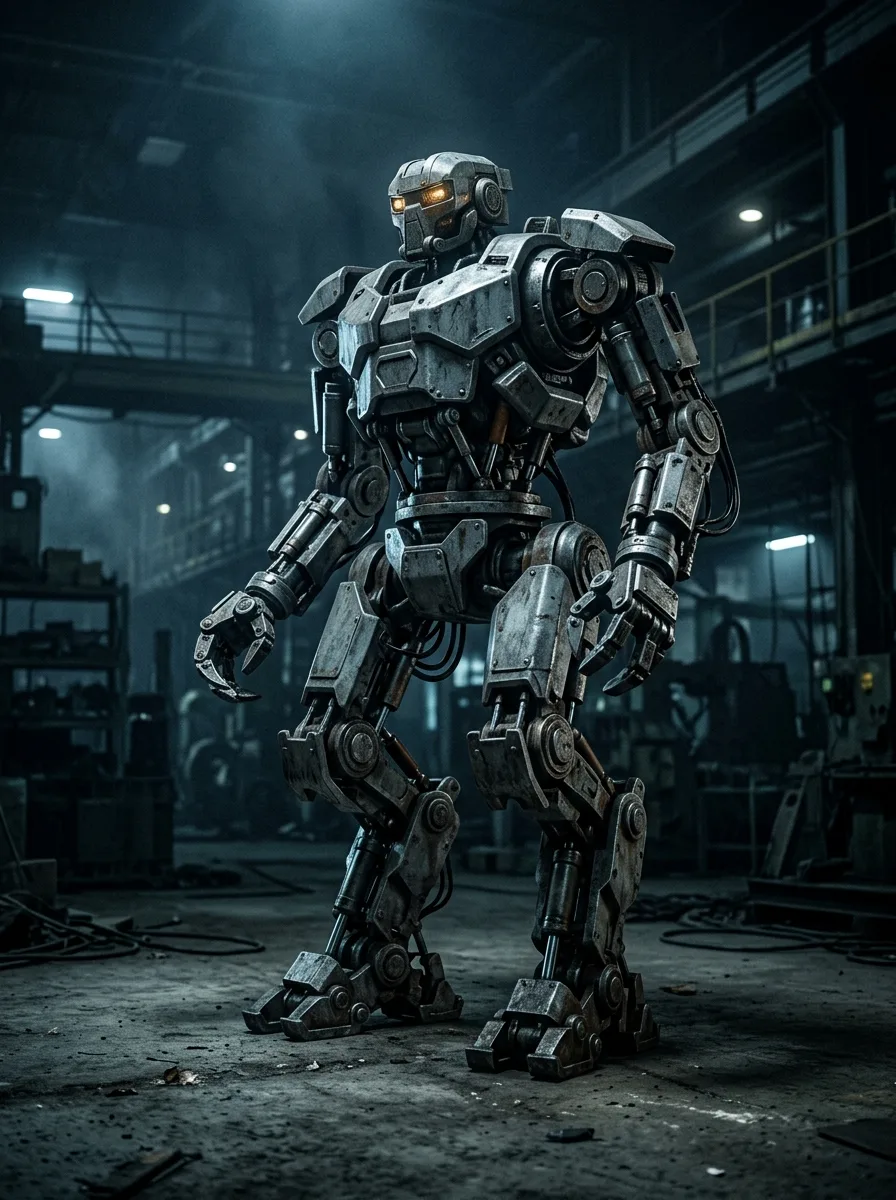
Heavy industrial bipedal robot in a dark warehouse
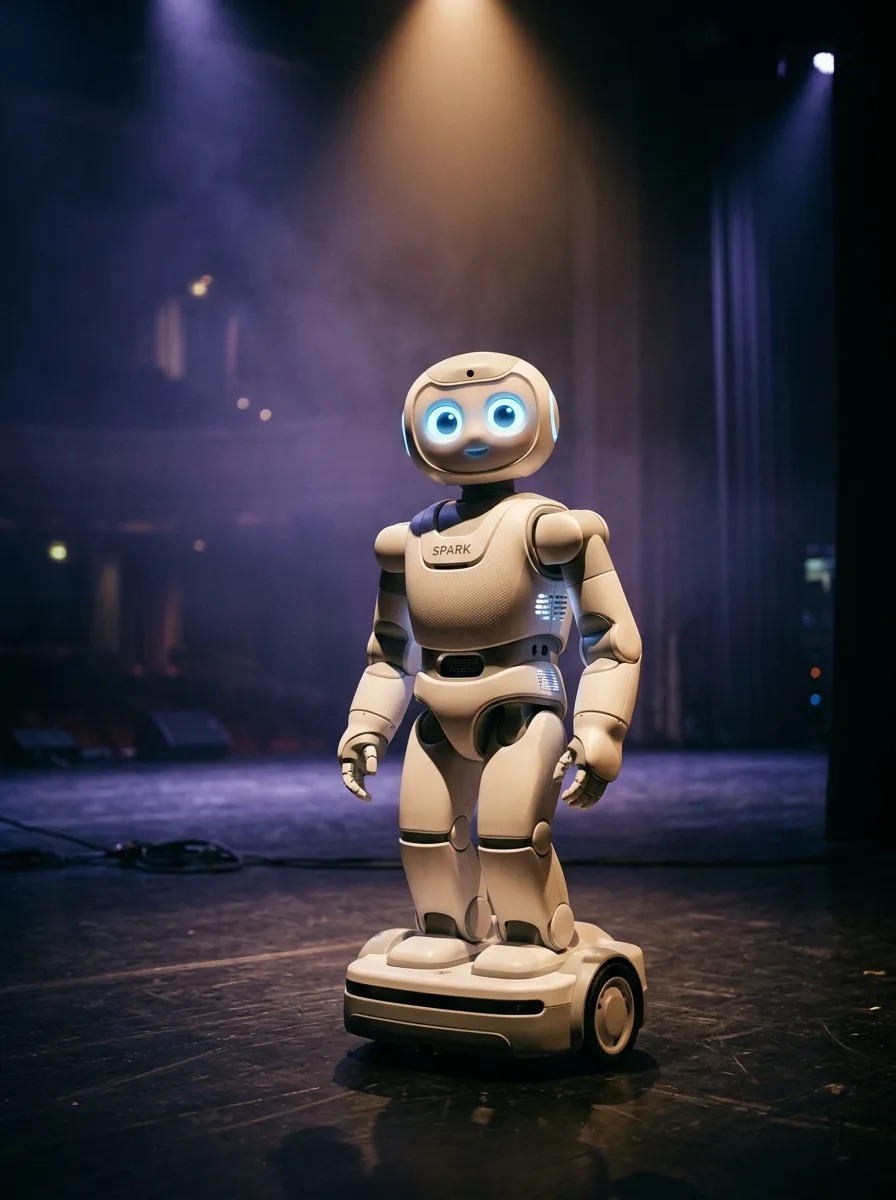
Small social robot with large round eyes on a stage
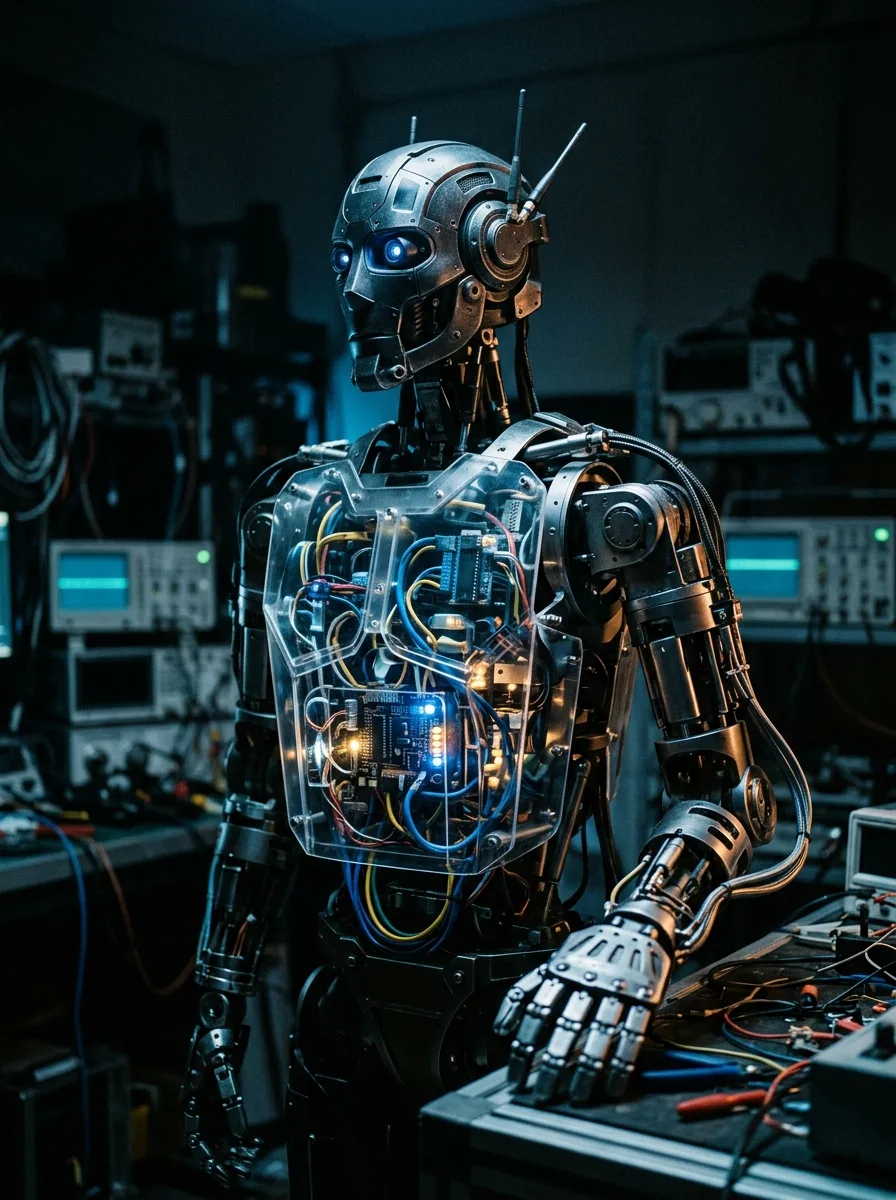
Research humanoid with exposed circuits in a laboratory
Elegant silver android in a dark suit at a conference
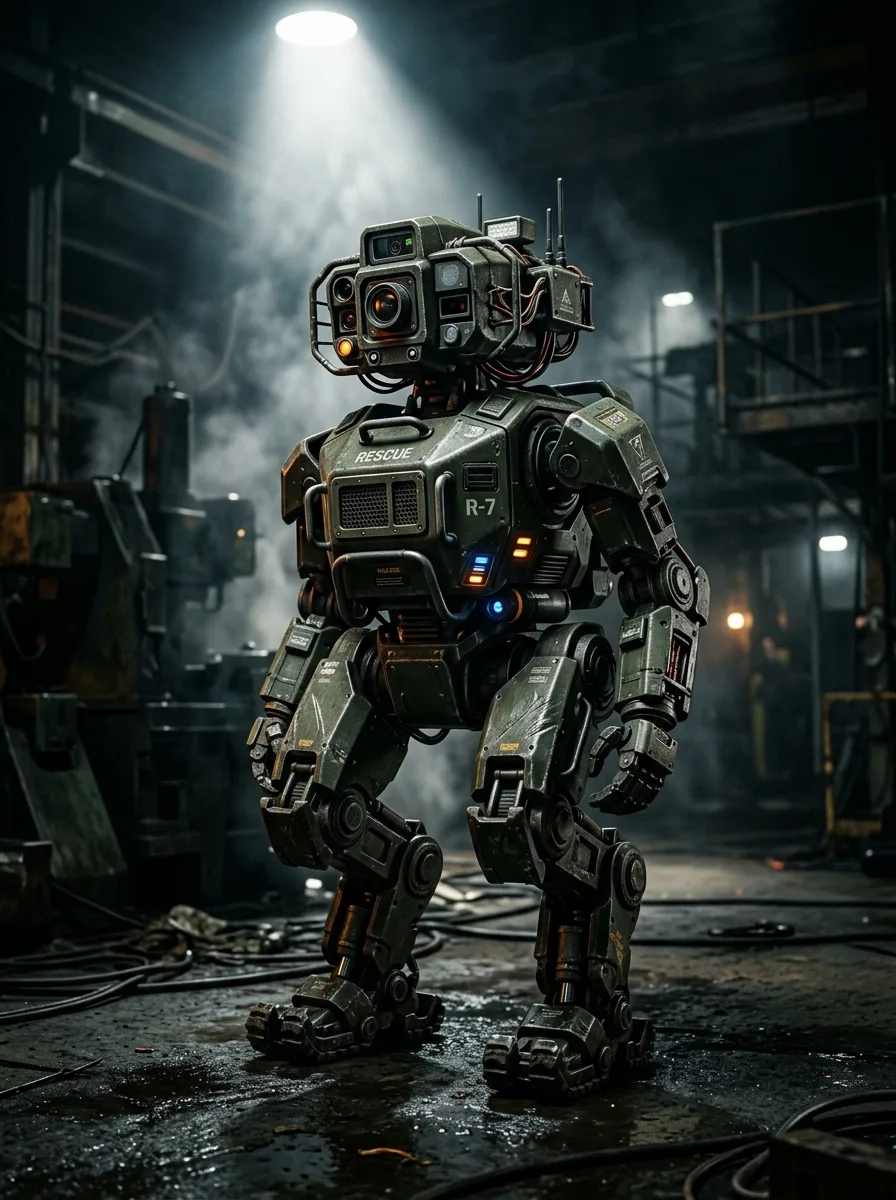
Compact armored rescue robot in an industrial space
HUMANOIDS · HUMANOIDS · HUMANOIDS · HUMANOIDS · HUMANOIDS · HUMANOIDS · HUMANOIDS · HUMANOIDS · HUMANOIDS · HUMANOIDS · HUMANOIDS · HUMANOIDS · HUMANOIDS · HUMANOIDS · HUMANOIDS · HUMANOIDS ·

Key Research Trends from the Humanoids 2015 Conference

The 15th IEEE-RAS International Conference on Humanoid Robots, convened at the Korea Institute of Science and Technology in Seoul in November 2015, represents a useful fixed point for understanding the trajectory of humanoid robotics as a discipline. Conferences of this kind are not merely exhibitions of current capability; they are records of what the research community considered important, contested, and tractable at a specific moment. Examining the thematic shape of Humanoids 2015 reveals a community in transition from foundational mechanical competence toward cognitive and social capability.

Bipedal Locomotion: Consolidation and New Challenges

By 2015, stable bipedal walking on flat surfaces was no longer a frontier problem for the humanoid robotics community. The theoretical foundations laid by work on the zero-moment point criterion, preview control, and capture point theory had been implemented in sufficiently robust form that several platforms could maintain balance and walk reliably under laboratory conditions. Humanoids 2015 reflected this maturation: flat-ground locomotion was present in the program as background competence rather than as a central research question.

The live frontier in 2015 was locomotion over uneven and uncertain terrain. The DARPA Robotics Challenge Finals, held just months before Humanoids 2015 in June 2015, had made viscerally clear the gap between what humanoid robots could do in controlled conditions and what they needed to do to be useful in real disaster-response scenarios. The falls at the DRC Finals set an agenda that Humanoids 2015 addressed directly. Papers on terrain estimation, footstep planning under uncertainty, whole-body balance recovery, and the use of compliant actuation for disturbance rejection all reflected the DRC's influence.

The locomotion research at Humanoids 2015 can be characterized by a shift in emphasis from nominal performance to robustness. The question was no longer whether a robot could walk but whether it could continue walking when the ground was not where it expected, when it was pushed, or when a foot placement failed to achieve the planned contact geometry.

Whole-Body Control and Task-Space Formulations

Whole-body control emerged as a major research theme at Humanoids 2015. The mathematical formulation underlying most whole-body control work treats the robot as a dynamical system subject to contact constraints and solves an optimization problem at each control cycle to find joint commands that satisfy a prioritized set of objectives.

By 2015, several competing software frameworks for whole-body control existed, including work from groups at Stanford, IIT, and MIT, as well as implementations specific to particular platforms. The Humanoids 2015 program included both theoretical contributions to the underlying optimization formulations and applied papers demonstrating whole-body control on specific tasks: loco-manipulation, stepping while carrying loads, and reactive balance during contact-rich tasks.

Learning from Demonstration and Imitation

The application of machine learning to humanoid motor skills was a prominent theme, with learning from demonstration (LfD) occupying a particularly active niche. LfD approaches allow a robot to acquire motor skills by observing human demonstrations rather than through explicit programming or reward-based trial-and-error. For humanoid robots, whose morphology is close enough to human morphology to make direct imitation plausible, LfD has a natural appeal.

Gaussian mixture models, dynamical movement primitives, and, increasingly, neural network representations were all present in the LfD work at Humanoids 2015. The deep learning revolution that would restructure much of the field was underway but not yet dominant in the robotics learning literature; the 2015 program shows the community at a moment of transition.

Perception for Manipulation and Navigation

Robotic perception in 2015 was being transformed by the availability of affordable depth sensors and by the rapid improvement of convolutional neural networks for visual recognition tasks. RGB-D perception had become standard for tabletop manipulation research, enabling robust object pose estimation under conditions that defeated earlier stereo vision approaches.

Object recognition and 6-DOF pose estimation were treated as largely solved for rigid objects in controlled lighting, with research interest shifting toward deformable objects such as clothing or cables, objects in cluttered scenes with significant occlusion, and objects in challenging lighting conditions.

The DRC Influence and Field-Deployable Systems

The shadow of the DARPA Robotics Challenge extended across the entire Humanoids 2015 program. The DRC had asked whether humanoid robots could perform useful work in environments too dangerous for humans, and the answer delivered by the 2015 Finals was: not yet, but closer than the failures suggest.

The recurring lesson from DRC post-mortems presented at Humanoids 2015 was the importance of robustness and graceful degradation over peak performance. A robot that can walk perfectly under ideal conditions but falls and cannot recover when conditions deviate is less useful than a robot with more modest peak performance that fails gracefully and can continue operating after disturbances.

Significance and Ongoing Influence

The research trends documented at Humanoids 2015 have proven accurate predictors of the field's subsequent development. Bipedal locomotion over rough terrain has advanced dramatically, with platforms demonstrating capabilities that would have appeared extraordinary in 2015. Whole-body control frameworks have become standard tools. Learning from demonstration has been subsumed into broader imitation learning and reinforcement learning paradigms. The social perception capabilities that were frontier research in 2015 are standard features of commercial social robot platforms.

The Impact of Cloud Computing on Humanoid Robotics Development

The computational demands of a humanoid robot are extraordinary relative to those of most other autonomous systems. A robot that must perceive its environment, model the social context, plan full-body motion, execute that motion safely, and maintain a dialogue in real time is running several of the hardest problems in computer science simultaneously. For most of the history of the field, this meant that the capabilities achievable on a physical platform were tightly bounded by the processing hardware it could carry. The emergence of cloud computing as a mature and accessible infrastructure has changed that equation in ways the Humanoids 2015 conference recognized as a structural shift.

The Computational Bottleneck in Humanoid Systems

A full-size humanoid robot contains between twenty and thirty degrees of freedom in its limbs alone, each requiring high-rate sensor feedback and closed-loop control to maintain stability and produce natural-looking motion. The whole-body controller responsible for coordinating these joints must run at update rates of one kilohertz or higher to maintain stability under disturbances. This hard real-time demand must be met on-board; no network link has the latency characteristics necessary to close a control loop at those frequencies.

Above the real-time control layer, however, the computational picture changes. Perception tasks operate on timescales of tens to hundreds of milliseconds. Planning tasks may tolerate latencies of seconds in cases where the robot can mask computation time with preparatory behavior. These are precisely the tasks that are most computationally expensive and most amenable to offloading.

Cloud Robotics: Architecture and Trade-offs

Cloud robotics formalizes the practice of decomposing a robot's computational workload between on-board hardware and remote cloud infrastructure. The on-board system handles tasks with strict real-time requirements: low-level joint control, immediate collision response, short-horizon reactive behavior. The cloud handles tasks where latency is tolerable: deep learning inference on large models, knowledge retrieval from large databases, collaborative learning across robot instances, and long-horizon planning.

The consensus that emerged was nuanced. Cloud offloading of heavy perception and learning workloads was clearly advantageous. The trade-offs involved reliability and latency variability. A robot that has offloaded critical functions to a cloud service becomes dependent on network availability. The discussions around cloud architecture consistently returned to the question of graceful degradation: how does a robot behave when its cloud connection is slow or unavailable?

Mobile Devices as an Ecosystem Bridge

By 2015, smartphones and tablets had become the dominant consumer computing platform, and the cloud services they depended upon had been engineered to the scale of billions of concurrent users. This meant that humanoid robot developers could, in principle, access the same cloud infrastructure serving consumer devices. The marginal cost of adding a robot as a client to an existing cloud service was low.

The practical consequence was that humanoid robots in 2015 could access speech recognition and natural language processing capabilities that far exceeded what they could run locally. This capability lift was not free, but for many social interaction scenarios, the trade-off was favorable.

Collaborative Learning Across Robot Platforms

One of the most compelling theoretical advantages of cloud robotics is the potential for collaborative learning: the accumulation of experience across multiple robot instances into shared models that benefit all instances. A single humanoid robot operating in a home accumulates experience slowly. A fleet of robots, each sharing its experience to a common cloud model, can accumulate experience at a rate proportional to fleet size.

The practical realization of collaborative learning at scale has proven to require careful attention to data quality, domain shift, and privacy. A robot operating in a home collects data about that home and its occupants. The use of that data for collaborative learning raises privacy questions that are not present in purely local learning scenarios.

Implications for System Design

The availability of cloud computing does not eliminate the need for capable on-board hardware; it shifts the allocation of computational responsibilities. A humanoid robot designed with cloud integration in mind requires a robust networking subsystem, well-defined interfaces between on-board and cloud components, and fallback behavior for degraded connectivity.

Current State and Forward View

The decade following Humanoids 2015 has validated the cloud robotics trajectory the conference identified. Large language models and large vision-language models, which require compute resources entirely beyond on-board capacity, are now standard components in advanced humanoid cognitive architectures. The architectural questions are more resolved: on-board real-time control, cloud-side heavy inference, edge compute for latency-sensitive perception tasks. The remaining challenges are in the integration layer.

Advancements in Human-Robot Interaction for Social Integration

The capacity of humanoid robots to participate in everyday human social environments represents one of the defining research challenges of modern robotics. Unlike industrial manipulators or mobile logistics platforms, a humanoid robot operating in a home, hospital, or public space must navigate an environment shaped entirely by and for human bodies, human norms, and human expectations. The 15th IEEE-RAS International Conference on Humanoid Robots placed social integration at the center of its technical program, drawing together researchers whose work addresses this challenge from mechanical, cognitive, and systems perspectives.

Defining Social Integration in Robotics Research

Social integration, in the context of humanoid robotics, refers to the ability of a robot to be accepted and functional within a human social group rather than merely physically co-located with one. This distinction matters because a robot can share a room with people while still operating as an alien presence. True social integration requires the robot to produce behavior that human observers can interpret as meaningful, responsive, and contextually appropriate.

Research engaged this problem from multiple directions. Work on proxemics examined how robots should position themselves relative to individuals and groups to appear neither threatening nor disengaged. Studies on gaze behavior investigated where a robot should direct its visual attention during conversation and how gaze shifts signal turn-taking intentions. Other contributions addressed the legibility of robot motion: the degree to which a robot's physical movements telegraph its upcoming actions.

Non-Verbal Communication as a Technical Problem

Non-verbal communication accounts for a substantial portion of human social interaction. Gesture, posture, facial expression, head orientation, and physical proximity all carry semantic content that operates in parallel with speech. For humanoid robots, replicating this bandwidth is a hardware and software challenge simultaneously.

On the hardware side, a robot requires sufficient degrees of freedom in its upper body, neck, and face to produce recognizable expressions and gestures. On the software side, generating appropriate non-verbal behavior requires real-time interpretation of the social context and continuous coordination of multiple output channels. Research in this area drew on advances in behavior trees, finite state machines, and learned policies derived from motion capture data of human interaction.

Verbal Interaction and Dialogue Management

Spoken dialogue remains the primary channel through which humanoid robots communicate intent, provide information, and sustain social engagement. The dialogue management systems reflected the state of the field at a transitional moment: deep learning had begun reshaping automatic speech recognition and natural language processing, but end-to-end learned dialogue systems were not yet mature enough for deployment on physical robots operating in uncontrolled acoustic environments.

What the community recognized is that dialogue management for social robots is not merely a natural language problem. It is a joint problem of language, timing, and physical behavior. A pause that would be unremarkable in a phone call reads as confusion or malfunction when it occurs in a face-to-face interaction with a physical robot. The embodiment of the system changes the stakes of every computational latency.

Safety and Comfort in Shared Physical Spaces

For a humanoid robot to be socially integrated, the people around it must feel safe. This requirement operates at two levels. At the physical level, the robot must not injure or threaten to injure the people near it. At the perceptual level, the robot must not produce behaviors that feel threatening even when they are objectively safe.

Perceptual safety is subtler and in some respects harder. Humans have strong pre-theoretic intuitions about the kinds of motions that signal aggression or instability, and these intuitions apply to robots as readily as to other humans. A robot that moves too quickly, approaches without warning, or maintains eye contact for longer than social norms permit will trigger discomfort even in technically sophisticated observers.

Metrics and Evaluation Challenges

One of the persistent methodological difficulties in HRI research is evaluation. Human responses to robot behavior are highly variable, context-dependent, and susceptible to novelty effects. The community engaged these measurement challenges with a pragmatic orientation, combining standardized questionnaire instruments with behavioral measures such as interaction duration, task completion rate, and physical approach distance.

Outlook

The trajectory of HRI research confirms the priorities identified. Large language models have transformed what is achievable in spoken dialogue. Advances in computer vision and pose estimation have improved the real-time social perception capabilities that underlie appropriate non-verbal behavior. The mechanical and control challenges of physical safety remain active, but the envelope of safe and natural motion continues to expand.